There is something almost magical about the arrival of summer. Nothing changes overnight, yet one morning we wake up with the feeling that time itself has adopted a different rhythm. The days become longer, the light lingers into the evening, conversations seem less hurried, and even our thoughts appear to slow down. After months spent measuring our lives through meetings, deadlines, presentations and an endless stream of notifications, summer quietly reminds us that not every moment has to be productive to be meaningful. It offers us a rare opportunity to step outside the relentless pace that modern society has normalized and to reconnect with one of our most valuable, yet increasingly neglected, abilities: the ability to think.
Few months ago, after speaking at a conference in New York, I decided to spend a few additional days visiting a friend in Washington, D.C. I could easily have returned home immediately, but something suggested that a short pause between professional commitments might be worthwhile. Looking back, I now realize that those few days became far more valuable than I could have imagined. There was no agenda to follow, no presentations waiting to be completed, no urgent emails demanding immediate attention. For the first time in several weeks, I allowed myself to experience what had become an unusual luxury: moving through a day without constantly looking at the clock.
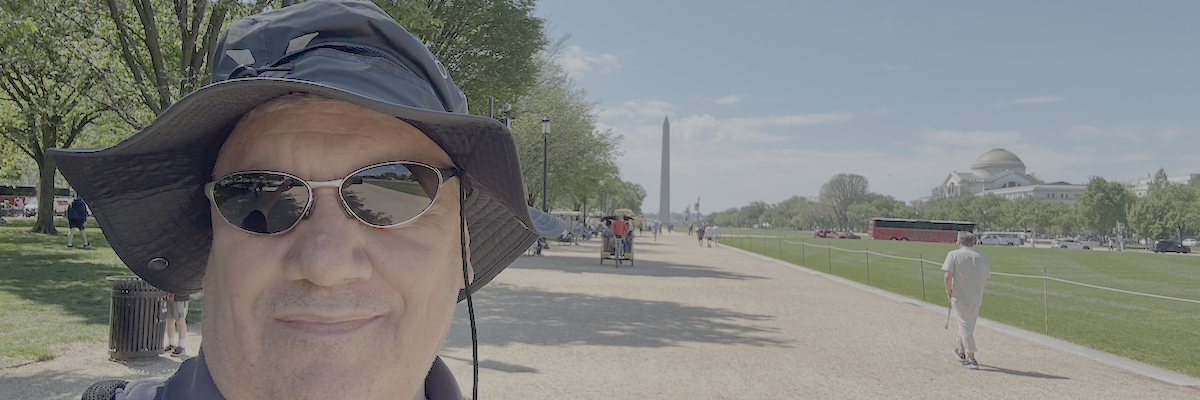
One beautiful morning we walked along the National Mall. The sky was perfectly clear, the Washington Monument stood silently at the end of the long promenade, and families, tourists and local residents crossed the park without apparent urgency. Children laughed while chasing birds across the grass, couples sat quietly beneath the trees, cyclists passed almost unnoticed, and people simply enjoyed being outdoors on a magnificent spring day. I found myself stopping for several minutes, observing nothing extraordinary. A few birds searched for food along the gravel path, occasionally flying from one tree to another without any visible destination. They were not accomplishing anything measurable, they were not following a schedule, and yet they seemed perfectly aligned with their environment. Watching them, I suddenly realized how uncommon it had become for me to observe something without immediately asking what purpose it served.
That realization stayed with me for the rest of the journey. Throughout my career I have travelled across dozens of countries, worked with governments, financial institutions, technology companies, universities and international organizations, and spent more than three decades discussing innovation, digital transformation and, more recently, Artificial Intelligence. People often ask where ideas originate, expecting the answer to involve books, research papers, conferences or the latest technological breakthrough. Those elements certainly contribute to expanding our knowledge, but experience has taught me that knowledge and insight are not the same thing. Some of the most important ideas that have shaped my professional life did not emerge while sitting in meeting rooms or reading technical documentation. They appeared while walking through unfamiliar cities, visiting museums, listening to music, observing nature or engaging in conversations that had no predefined objective. Ideas, much like living organisms, often require silence before they become visible.
This is perhaps the greatest paradox of our age. Never before have we had access to such extraordinary computational capabilities. Artificial Intelligence can analyse millions of documents, summarize complex reports within seconds and generate remarkably sophisticated responses to questions that would have required hours of human effort only a few years ago. Yet precisely because machines have become so efficient at processing information, we are beginning to appreciate something that technology cannot accelerate: the slow maturation of human judgment. Information can be computed almost instantaneously, but wisdom continues to develop at the pace of human experience, reflection and curiosity.
As organizations increasingly integrate Artificial Intelligence into their daily operations, there is a natural tendency to equate speed with intelligence.
Faster analyses, faster decisions and faster execution certainly create value, but they do not automatically produce better thinking. The most important strategic decisions are rarely determined by who possesses the greatest quantity of information. More often they depend on who is capable of asking better questions, connecting apparently unrelated ideas and recognizing patterns that remain invisible to purely analytical reasoning. Reflection is therefore not a luxury that organizations can no longer afford; it is becoming one of the few genuinely human competitive advantages that technology cannot replace.
Perhaps this is why summer deserves to be considered something more than a holiday season. It is a reminder that our minds, much like nature itself, require periods of renewal. Just as a musical composition depends as much on silence as it does on notes, and just as every painting relies on empty canvas to give meaning to colour, our thinking depends upon moments in which nothing apparently productive is happening. Those empty spaces are not interruptions in our intellectual life; they are the very conditions that allow new perspectives to emerge.
Whenever I look back at that morning in Washington, I remember neither the conference that had brought me to the United States nor the business discussions that had occupied the previous days. Instead, I remember the sunlight filtering through the trees, the birds moving freely across the park, and the unexpected realization that slowing down is sometimes the most productive decision we can make. That simple walk has remained with me far longer than many meetings, contracts or presentations, reminding me that the architecture of thought is built not only through study and experience but also through contemplation.
As another summer begins, perhaps we should all allow ourselves the rare privilege of becoming temporarily inefficient. Walk without a destination, read without searching for practical outcomes, observe the world without immediately trying to explain it, and rediscover the pleasure of allowing ideas to arrive in their own time. Artificial Intelligence will undoubtedly continue transforming the way we work, learn and innovate, but the future will ultimately belong to those who preserve the uniquely human capacity to reflect deeply before acting.
Summer, more than any other season, gently invites us to remember exactly how to do that.
Enjoy your summer !