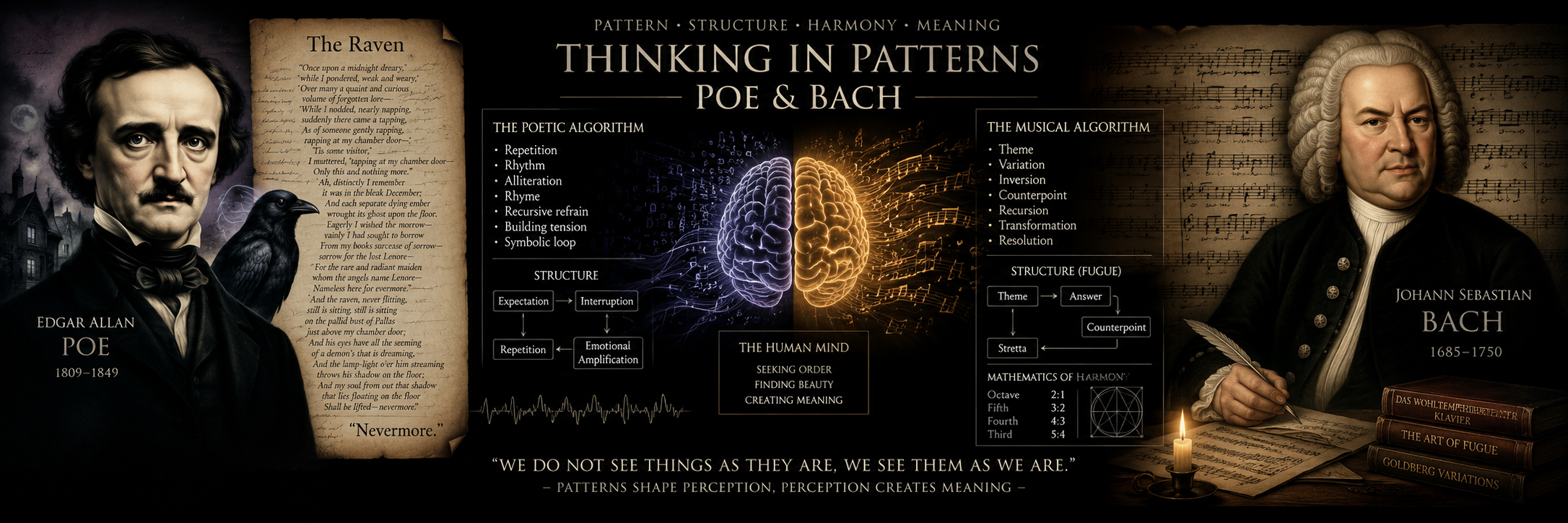
Human beings often perceive poetry and music as emotional expressions, spontaneous creations emerging from inspiration and artistic sensibility. Yet beneath some of the most powerful artistic works ever produced lies something far more structured: patterns, recursive architectures, rhythmic algorithms, numerical symmetries, and carefully engineered systems of repetition.
Two seemingly distant worlds — the dark poetic universe of Edgar Allan Poe and the mathematical musical structures of Johann Sebastian Bach — reveal an extraordinary commonality. Both demonstrate how human culture repeatedly transforms mathematical order into emotional experience.
The Hidden Mechanics of Emotion
When listening to Bach or reading Poe, most people do not consciously analyze patterns. They experience tension, beauty, melancholy, expectation, rhythm, and resolution. But these emotional reactions are often generated through highly structured architectures operating beneath conscious perception.
In The Raven, Poe constructs meaning not only through narrative, but through obsessive sonic engineering:
internal rhyme,
alliteration,
metrical repetition,
recursive sound patterns,
rhythmic predictability interrupted by variation.
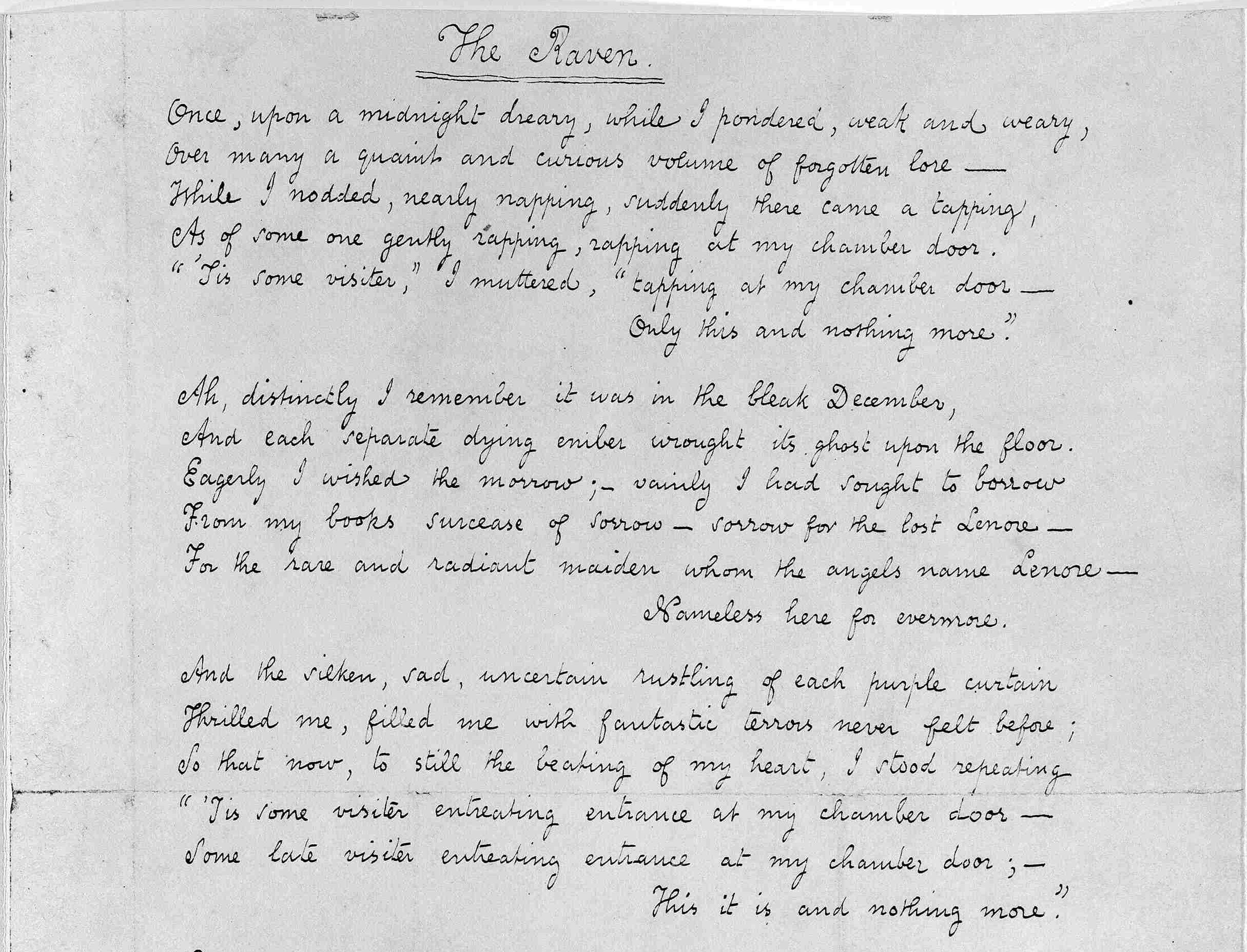 The famous refrain:
“Nevermore”
functions almost algorithmically. Each repetition slightly changes emotional weight depending on context, creating recursive amplification. The word becomes:
sound,
rhythm,
symbol,
psychological loop.
The poem behaves almost like a computational process operating on human expectation.
Poe himself explicitly wrote about the construction of poetry. In The Philosophy of Composition, he argued that artistic creation should not be viewed as pure inspiration, but as a deliberate architectural process. Emotional impact was engineered.
Bach and the Mathematics of Harmony
Bach operates similarly, but through sound instead of language.
In works such as:
The Art of Fugue,
Goldberg Variations,
and the Well-Tempered Clavier,
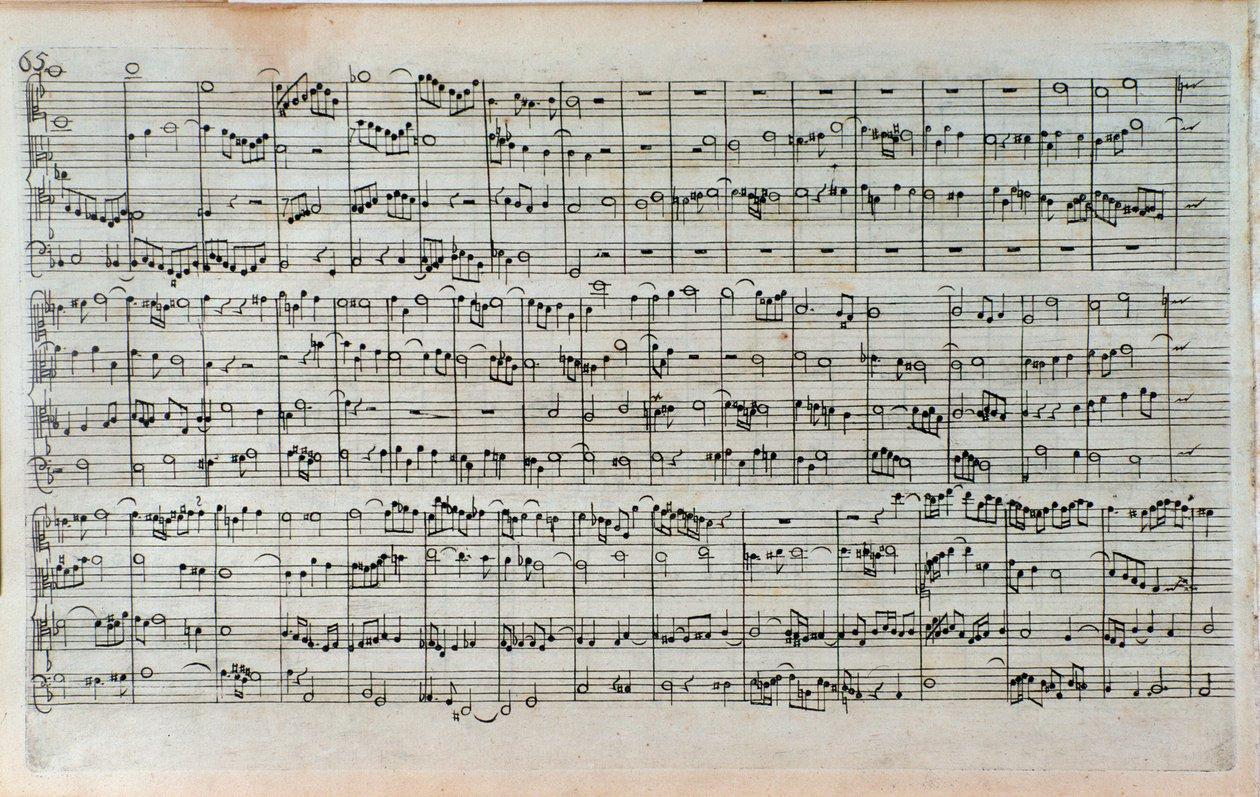 music becomes an exploration of transformation rules.
Themes are:
inverted,
mirrored,
stretched,
compressed,
repeated recursively,
layered against themselves.
A fugue is almost algorithmic in nature:
a musical idea enters,
transforms,
reappears,
interacts with itself from different perspectives.
This resembles mathematical recursion:
f(x)=f(f(x))
Bach demonstrates that harmony emerges not from randomness, but from proportional relationships between frequencies and carefully controlled structural evolution.
The famous musical intervals themselves derive from simple numerical ratios:
- octave: 2:1
- perfect fifth: 3:2
- perfect fourth: 4:3
Emotion emerges from arithmetic relationships embodied in sound.
Repetition as Cognitive Technology
Why do these structures affect us so deeply?
Because the human brain is fundamentally a pattern-recognition system.
Repetition creates:
expectation,
anticipation,
memory,
familiarity,
symbolic reinforcement.
Variation within repetition creates:
surprise,
tension,
emotional release.
Both Poe and Bach manipulate these mechanisms masterfully.
In The Raven, rhythmic predictability creates hypnotic psychological immersion.
In Bach, recurring motifs create navigational anchors within complexity.
The audience perceives coherence even without consciously understanding the structure.
This may explain why highly patterned works often survive centuries:
they resonate with fundamental cognitive architectures of human perception itself.
The Sociological Dimension of Patterns
From a broader cultural perspective, these works reveal something profound about civilization.
Human societies continuously create systems that transform invisible structures into shared meaning:
language,
mathematics,
music,
architecture,
ritual,
poetry,
algorithms.
Culture itself may be understood as a gigantic pattern-preservation mechanism.
Bach encoded mathematical relationships into harmony.
Poe encoded recursive emotional logic into language.
Both transformed abstract structures into collective emotional experiences.
Today, in the era of artificial intelligence, this relationship becomes newly important.
Modern AI systems are themselves pattern machines:
they identify,
compress,
predict,
and regenerate structures across language, sound, and images.
Ironically, centuries before computation existed, artists like Bach and Poe were already exploring algorithmic aesthetics through human creativity alone.
Different Ways of Knowing
The convergence between music, mathematics, poetry, and cognition suggests that knowledge itself is multidimensional.
A mathematical formula,
a musical interval,
a poetic refrain,
or a visual symmetry
may all express the same underlying reality through different representational systems.
This is why works like Bach’s fugues and Poe’s poetry continue to fascinate not only artists, but also:
mathematicians,
neuroscientists,
linguists,
computer scientists,
philosophers.
They reveal that human intelligence does not operate solely through logic or emotion independently, but through structured interactions between pattern and meaning.
Conclusion
Perhaps the deepest lesson from Poe and Bach is that beauty is rarely accidental.
What appears emotional often hides architecture.
What appears intuitive often contains mathematics.
What appears artistic often behaves algorithmically.
Long before modern computation, great artists understood that the human mind responds profoundly to:
proportion,
rhythm,
recursion,
symmetry,
transformation,
and structured variation.
In this sense, poetry and music are not opposites of mathematics.
They are among its oldest and most human forms.