Artificial intelligence is not merely a technological innovation. It represents a structural shift in how societies produce value, organize labor, and ultimately generate economic growth. In previous industrial transitions, machines replaced human physical effort while leaving cognitive work largely intact. Today, AI operates in a different domain: it targets repetitive cognition, the predictable patterns of thinking that underpin a large portion of modern economic activity.
This transformation is already reshaping the foundations of labor markets. Tasks that once required human intervention, data processing, standardised analysis, administrative coordination, are increasingly executed by systems capable of operating at scale, speed, and consistency beyond human limits. The consequence is not simply the disappearance of jobs, but the recomposition of work itself. Roles are being fragmented into tasks, some of which are automated, others augmented, and still others newly created.
In this sense, the question is no longer whether AI will replace human labor, but rather which aspects of human contribution remain irreplaceable. The emerging answer points toward judgment, interpretation, creativity, and responsibility, dimensions of work that are not easily reducible to patterns. Human labor is shifting away from execution toward orchestration, where individuals increasingly supervise, guide, and contextualize the outputs of intelligent systems.
This transformation, however, does not unfold uniformly across the globe. It is filtered through institutional structures, economic models, and governance choices. China, the United States, and Europe illustrate three distinct trajectories, each embedding AI within a different conception of labor and society.
China approaches AI as an instrument of coordination. Through policies such as the New Generation Artificial Intelligence Development Plan, the state actively directs investment, aligns industrial priorities, and integrates workforce transitions into broader national strategies. The result is not a simple reduction of labor demand, but a large-scale reallocation of human effort toward sectors deemed strategically relevant. In this model, labor becomes a managed resource within a system optimized for efficiency and stability.
The United States follows a markedly different path. Here, AI adoption is driven by market forces and technological competition, with companies such as OpenAI, Google, and Microsoft leading the transformation. The labor market reflects this dynamism: rapid innovation generates new opportunities, but also accelerates the obsolescence of existing roles. The outcome is a highly fluid environment characterized by both growth and polarization. Workers are expected to adapt continuously, often without the support of coordinated institutional frameworks.
Europe, by contrast, situates AI within a normative and regulatory context. Initiatives such as the EU AI Act reflect an attempt to balance innovation with social protection. Labor markets evolve more gradually, with stronger emphasis on reskilling, worker rights, and ethical considerations. This approach mitigates some of the disruptive effects observed elsewhere, but it also introduces constraints that may limit the speed of economic transformation.
Across these regions, a common pattern emerges: AI does not eliminate work in a uniform manner. Instead, it redistributes opportunities, amplifies existing inequalities, and accelerates the pace at which skills become obsolete. Institutions such as the World Bank emphasize that the central challenge lies not in the technology itself, but in the ability of societies to adapt.
It is within this context that the relationship between AI and economic growth must be understood. Traditional models of growth assume a relatively stable link between labor, capital, and output. Productivity increases lead to higher GDP, which in turn supports employment and income expansion. AI disrupts this equilibrium by enabling output to grow without a proportional increase in labor input.
This decoupling marks a significant departure from historical patterns. Economic growth becomes less dependent on the quantity of labor and more dependent on the quality and integration of intelligence within production systems. Value creation shifts from the execution of tasks to the design and management of systems capable of executing them autonomously.
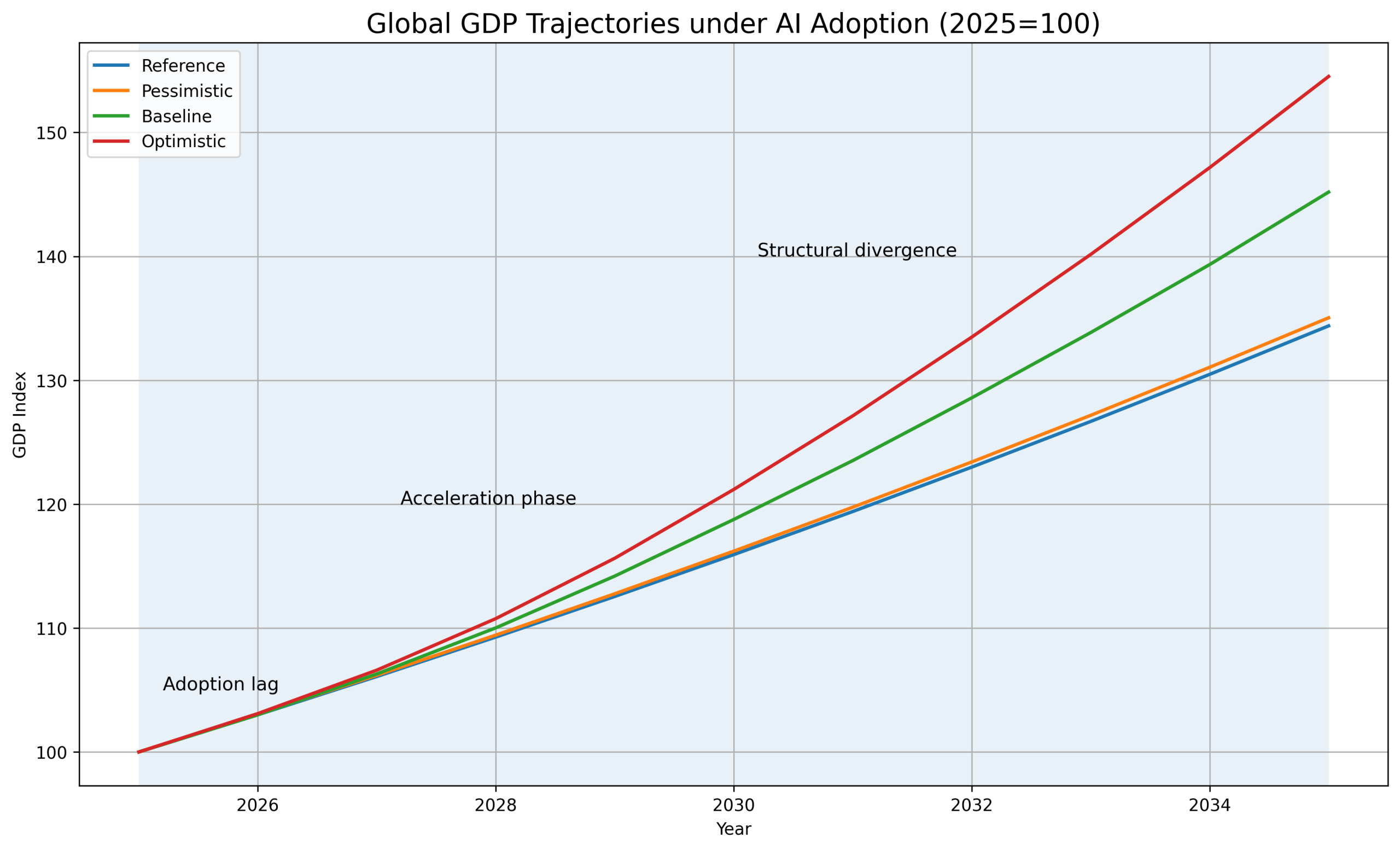
Figure 1. Global GDP Scenario Trajectories under AI Adoption (2025–2035)
The implications for GDP are therefore not immediate but cumulative. As illustrated in Figure 1, the divergence between economic trajectories emerges gradually, reflecting the lag between technological adoption and measurable productivity gains. In the early phase, growth paths remain relatively close, reinforcing the idea that technology alone does not generate immediate macroeconomic effects.
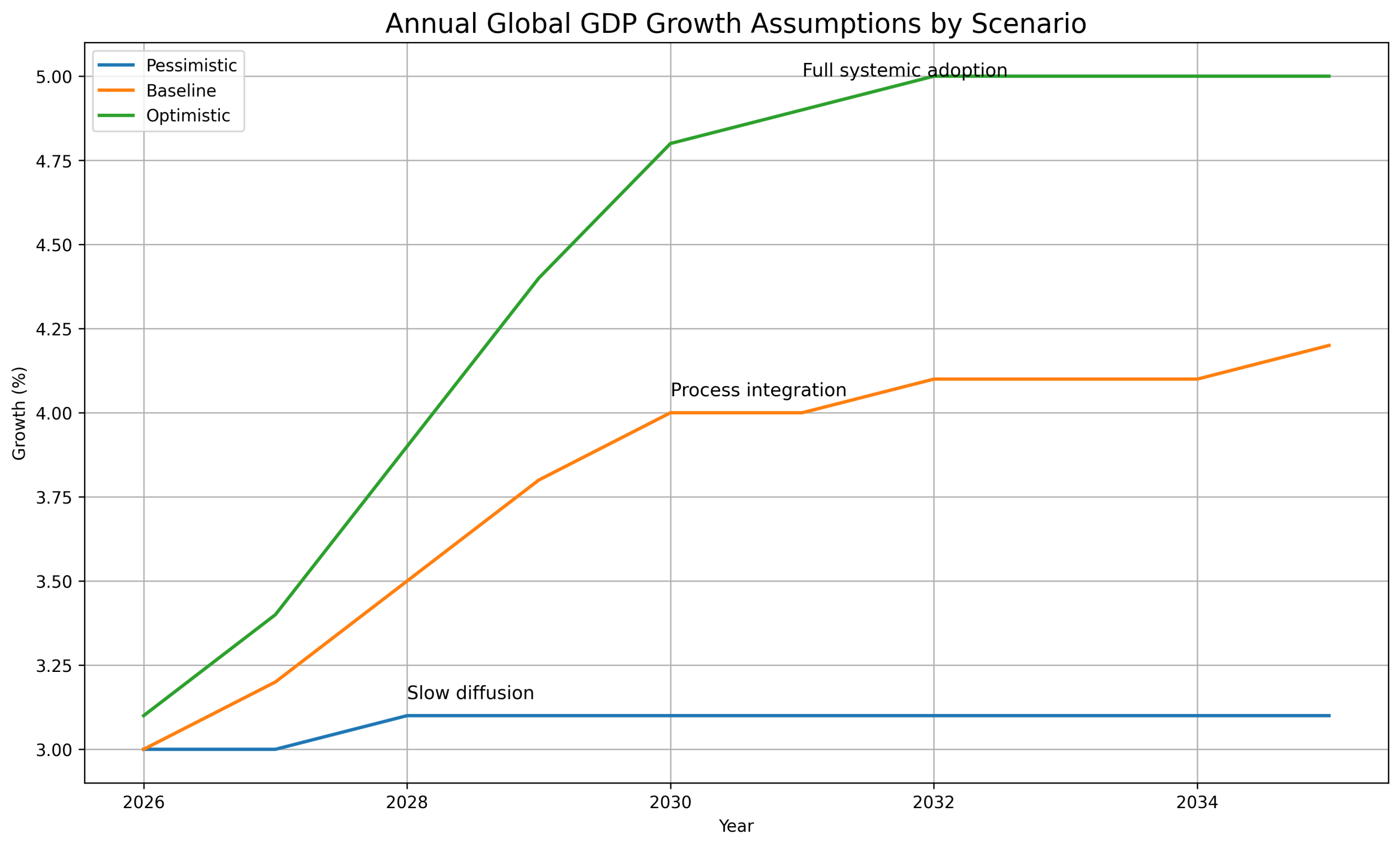
Figure 2. Annual Global GDP Growth Assumptions Across Scenarios
The underlying assumptions behind these trajectories are not uniform. As detailed in Figure 2, each scenario is driven by a different pattern of annual growth, reflecting varying degrees of adoption, institutional alignment, and productivity realization. The distinction is subtle in the short term, but becomes structurally significant over time.
Over the decade, these small differences compound. In a baseline scenario, the progressive integration of AI into organizational processes leads to a moderate but sustained acceleration of growth. As shown in Figure 1, this trajectory departs from the reference path through incremental gains that accumulate rather than through abrupt discontinuities.
A more pronounced divergence appears in the optimistic scenario. Here, AI is fully embedded into the architecture of institutions and firms. Processes are redesigned, decision-making is augmented, and coordination becomes more efficient. Under these conditions, productivity gains reinforce each other. The cumulative effect, visible in Figure 1, results in a structurally higher level of output by the end of the period.
The pessimistic scenario highlights a different outcome. In this case, adoption remains fragmented and organizational change is limited. As a result, growth follows a path that remains close to historical patterns, as illustrated in Figure 1, demonstrating that without systemic transformation, technological potential does not translate into economic expansion.
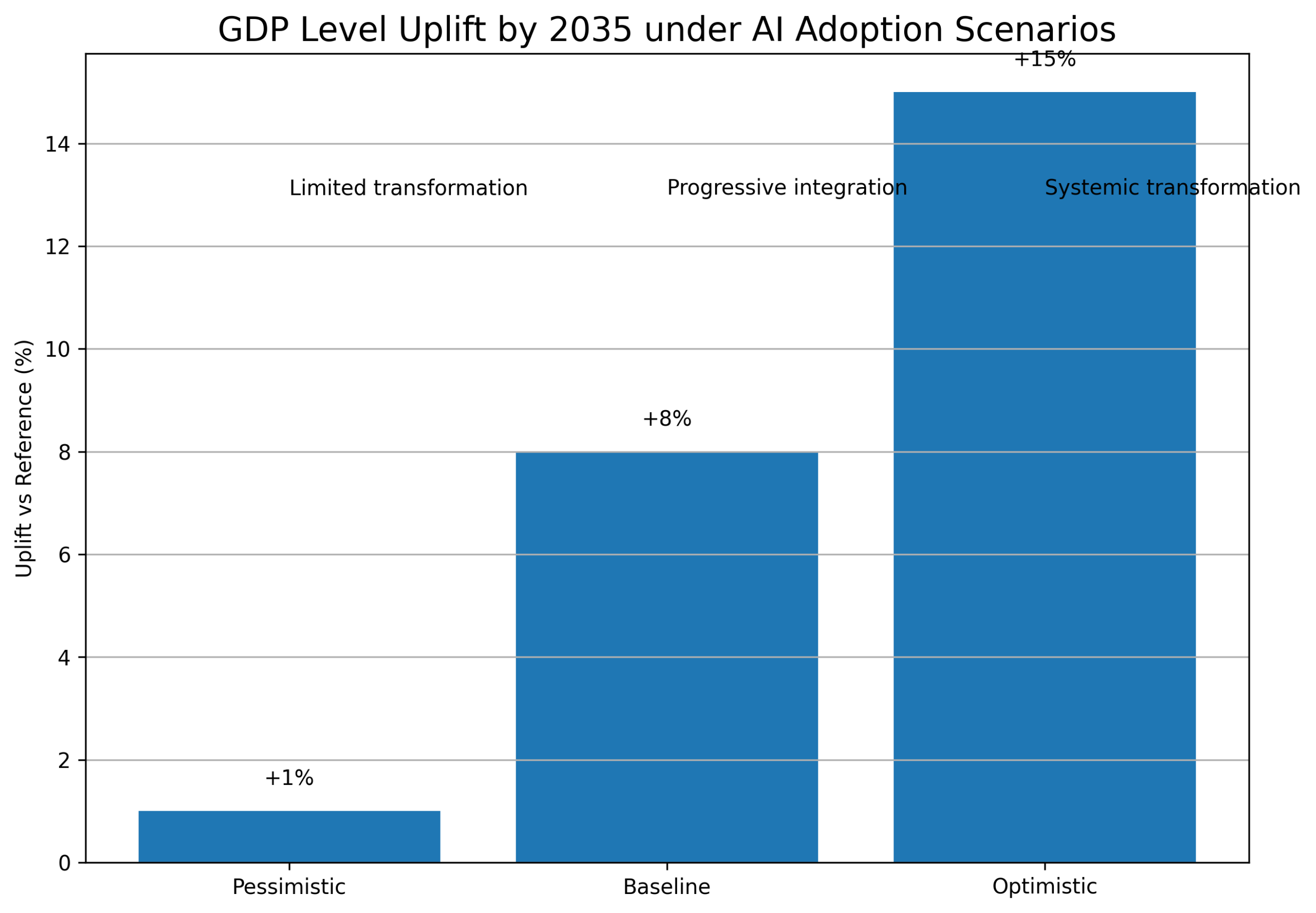
Figure 3. GDP Level Uplift by 2035 Across Scenarios
The long-term implications of these trajectories are summarized in Figure 3, which compares the relative GDP levels reached by 2035. The differences are not marginal. They reflect the cumulative effect of adoption speed, institutional readiness, and the capacity to translate technological capability into sustained productivity gains.
These trajectories align with projections from institutions such as PwC and McKinsey & Company, which estimate substantial potential contributions of AI to global output. However, these projections are conditional. The World Bankconsistently emphasizes that growth depends on how effectively societies adapt their institutions, education systems, and governance models.
This perspective invites a reconsideration of GDP itself as a measure of economic performance. As AI increases the importance of intangible assets, knowledge, data, and decision systems, traditional metrics become less capable of capturing the full scope of value creation.
Economic performance increasingly depends on what can be described as intelligence density: the extent to which cognitive capabilities are embedded within systems of production and governance.
The future of work and the future of growth are therefore inseparable.
As AI transforms labor, it simultaneously reshapes the mechanisms through which economies expand. The transition from a labor-driven economy to a cognition-driven one challenges long-standing assumptions about productivity, employment, and value.
Ultimately, the impact of AI on GDP will depend less on technological capability than on institutional response. The scenarios illustrated across Figures 1, 2, and 3 are not determined by the availability of AI systems, but by the degree to which societies align technology with governance, education, and economic organization.
What is at stake is not simply the evolution of markets, but the redefinition of human agency within economic systems. Societies that succeed will be those that recognize this shift and respond not only with technological adoption, but with institutional innovation. In the end, economic growth in the age of AI will not be a function of inputs alone, but of how effectively intelligence—both human and artificial—is organized within the structures of society.
Where the figures came from …
Figure 1. Global GDP Scenario Trajectories under AI Adoption (2025–2035)
Baseline growth assumptions derived from International Monetary Fund World Economic Outlook. Scenario uplifts calibrated using estimates from PwC and McKinsey & Company. Author’s elaboration.
Figure 2. Annual Global GDP Growth Assumptions Across Scenarios
Illustrates differing annual growth rates underlying pessimistic, baseline, and optimistic AI adoption scenarios.
Figure 3. GDP Level Uplift by 2035 Across Scenarios
Comparison of cumulative output differences relative to the reference trajectory.