 When technology stops being the destination and becomes part of the city’s capacity to understand, anticipate and act
For more than twenty years, we have been trying to make cities smart. We have connected traffic lights, buses, buildings, parking spaces, energy grids and water systems. We have created control rooms, data platforms, digital services, urban dashboards and, more recently, digital twins. We have surrounded the physical city with an increasingly sophisticated informational representation of itself.
Yet I increasingly wonder whether smart is still the right word.
Perhaps it was the right word for a particular historical moment. The Smart City emerged when the central technological challenge was connectivity: connecting physical infrastructure to networks, networks to platforms, platforms to data and data to decision-makers. It reflected the optimism of an era in which making something digital, connected and measurable seemed almost synonymous with making it better.
I lived through an earlier version of this transformation in telecommunications and digital services. In the 1990s and 2000s, we were building infrastructures that progressively disconnected communication from place. GSM, roaming, the SIM, mobile payments, smart cards and later smartphones did much more than introduce new devices. They changed the architecture through which people interacted with services, organisations and eventually with one another. Working across mobile operators, financial institutions, transport and payment ecosystems taught me something that I still consider fundamental: the real transformation rarely resides in the technology itself. It happens when technology changes the relationships between actors.
A mobile phone was interesting as a piece of technology. A global mobile ecosystem was transformative.
A payment card was useful. An interoperable payment infrastructure changed commerce.
A transport smart card was convenient. An integrated mobility ecosystem changed how people could experience a city.
The same distinction matters today when we talk about cities and artificial intelligence.
The question is no longer whether the city can become more connected. It already is. Nor is the interesting question whether we can collect more urban data. We certainly can. The question now is whether all that connectivity, data and computational capability can make the city itself more capable of understanding what is happening, interpreting why it is happening, anticipating what might happen next and acting intelligently in response.
That is why I prefer to think about the transition from the Smart City to the Augmented City.
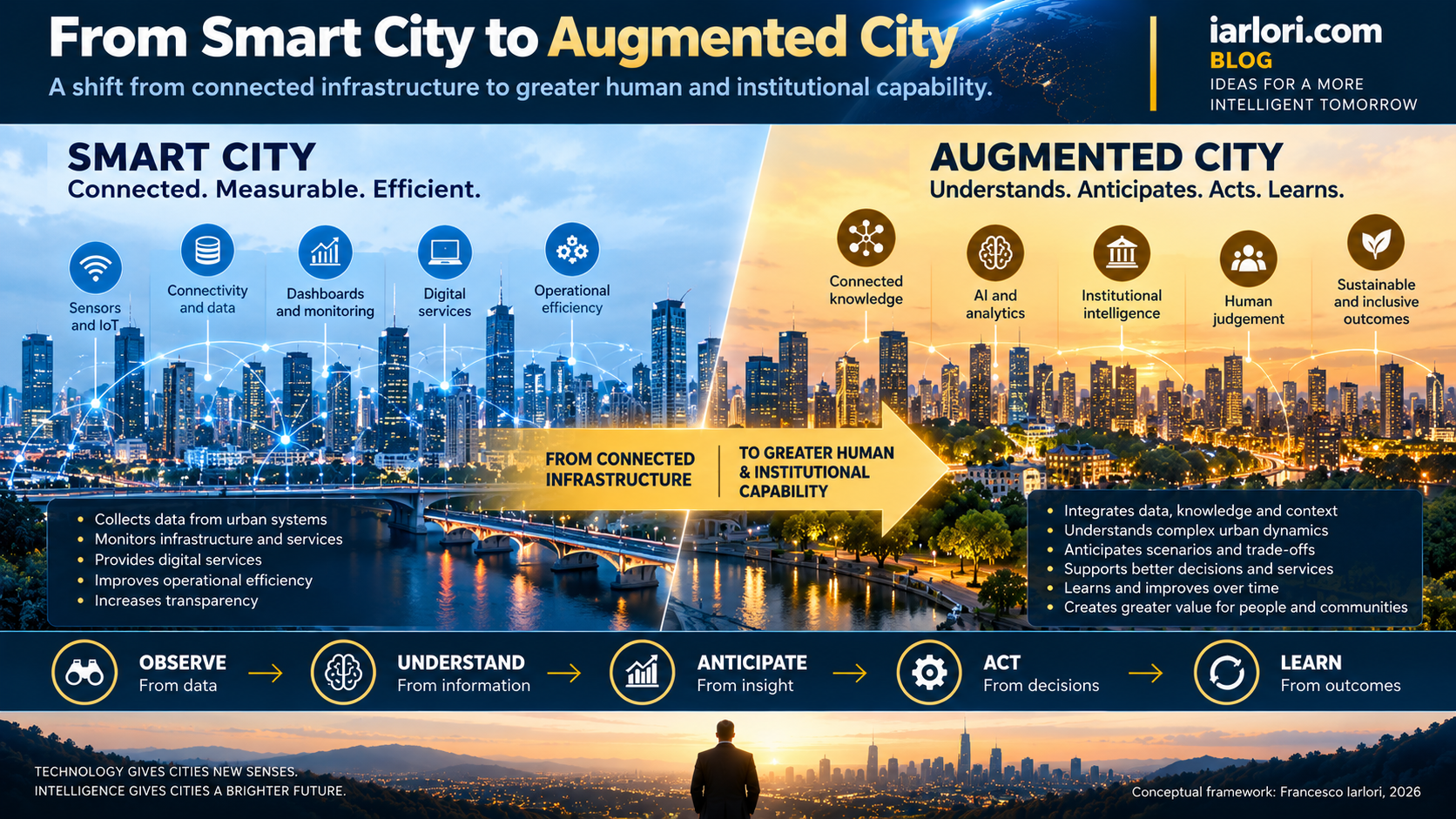
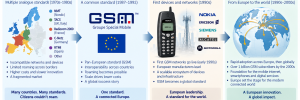
Figure 1 – From Smart City to Augmented City. The transition is not simply from less technology to more technology, but from connected infrastructure to greater human and institutional capability. The Augmented City connects data, knowledge, AI and human judgement to understand, anticipate, act and learn. Conceptual framework: Francesco Iarlori, 2026.
The city has acquired senses. Now it needs understanding.
The first generation of Smart City technologies effectively gave the city new senses. Sensors could measure traffic, pollution, temperature, energy consumption, water levels and countless other aspects of urban life. Mobile networks allowed those observations to travel. Cloud computing allowed them to be stored and processed. Geographic information systems attached them to place. Smartphones transformed citizens themselves into participants in an enormous distributed information network.
For anyone who remembers how urban systems operated before this infrastructure existed, the change is extraordinary.
But having senses is not the same as possessing intelligence.
A traffic sensor can tell us that vehicles are moving slowly. It cannot, by itself, tell us why. The explanation may lie in an accident, roadworks, a football match, rain, a school entrance, a failure in public transport or simply an unusual combination of small events elsewhere in the network.
And this distinction between data and meaning has become one of the central questions in my work on artificial intelligence and organisations.
In my LinkedIn newsletter Institutional Intelligence, and more broadly in my writing about Organisational Intelligence, I have repeatedly argued that organisations do not become intelligent simply because they possess more information or more AI. Intelligence emerges from the ability to connect information with context, knowledge, experience, judgement and action.
A city is perhaps the most complex example of such an organisation.
It contains enormous quantities of knowledge, but that knowledge is distributed among institutions, departments, databases, documents, people and physical systems. Mobility knows something. Urban planning knows something else. Environmental agencies possess another part of the picture. Utilities understand their networks. Social services understand vulnerabilities. Police and emergency services see another reality. Universities, businesses and citizens possess still other fragments.
The city therefore knows far more than any individual part of the city knows.
The problem is that the city does not necessarily know what it knows.
That is fundamentally a problem of Organisational Intelligence.
From the Smart City to the intelligent organisation
This is why I believe that the next urban transformation will be less about installing technology and more about connecting knowledge.
For decades, organisations have been structured vertically. Departments developed their own competencies, processes, applications, databases, budgets and professional languages. There were good reasons for this structure: specialisation made large organisations manageable.
Technology largely reproduced those boundaries.
We created applications for transport, applications for planning, applications for finance, applications for citizens and applications for internal administration. Even when everything became digital, the organisation remained fragmented.
Cities are particularly vulnerable to this problem because urban reality stubbornly refuses to respect organisational charts.
A heatwave is simultaneously an environmental, healthcare, social, energy and public-space problem. Flooding is a weather phenomenon until it becomes a transport problem, an infrastructure problem, an emergency-management problem and potentially a social problem. Accessibility cannot be understood simply by knowing where a metro station is located; we also need to understand pavements, lifts, temporary roadworks, buses, pedestrian routes and the specific circumstances of the person travelling.
The citizen experiences one city.
The institution often sees many administrative domains.
The Augmented City has to begin closing that gap.
Artificial intelligence becomes interesting in this context not because we can attach a chatbot to a municipal website, but because AI gives us new mechanisms for connecting previously separated forms of knowledge. Machine learning can identify patterns across datasets. Generative AI can create interfaces over large collections of institutional knowledge. Knowledge graphs can represent relationships between entities. Retrieval systems can find relevant information hidden in thousands of documents. Predictive models can connect historical patterns with current conditions. Digital twins can bring physical and informational representations of the city together.
What is emerging is potentially a knowledge layer for the city.
That, in my view, is much more significant than the current enthusiasm around individual AI applications.
The city as a knowledge system
My interest in this question is not purely theoretical. Working across technology and organisational transformation, and more recently much closer to the reality of public administration, has reinforced my conviction that the hardest problem is rarely the absence of data.
Public institutions possess an extraordinary amount of information.
There are administrative databases, geographic information systems, open-data repositories, regulations, historical decisions, technical reports, procurement documents, demographic information, operational platforms and decades of accumulated professional experience. There is also a vast amount of knowledge outside the administration itself, in universities, utilities, companies, associations and citizens.
The difficulty is making the right piece of that knowledge available at the moment when it can improve a decision.
This is precisely the problem I have been exploring under the concept of Organisational Intelligence.
In The Architecture of Thought, I argue that the transformative question around AI is not simply whether machines can become more intelligent. We should also ask whether organisations can become more intelligent through the interaction between artificial intelligence, institutional knowledge and human judgement.
The same argument can be applied at urban scale.
Imagine a city in which someone responsible for planning an intervention does not need to know which database contains the relevant information, which department produced a particular document or which application owns a specific dataset. Instead, the institutional knowledge environment can assemble the relevant context around the problem.
This is substantially different from search.
Search gives us documents.
Intelligence helps establish relationships.
The question might be: Which areas of the city combine an ageing population, poor public-transport accessibility, low vegetation coverage and high vulnerability during extreme heat?
No single municipal database necessarily contains the answer.
The answer emerges from the relationship between datasets.
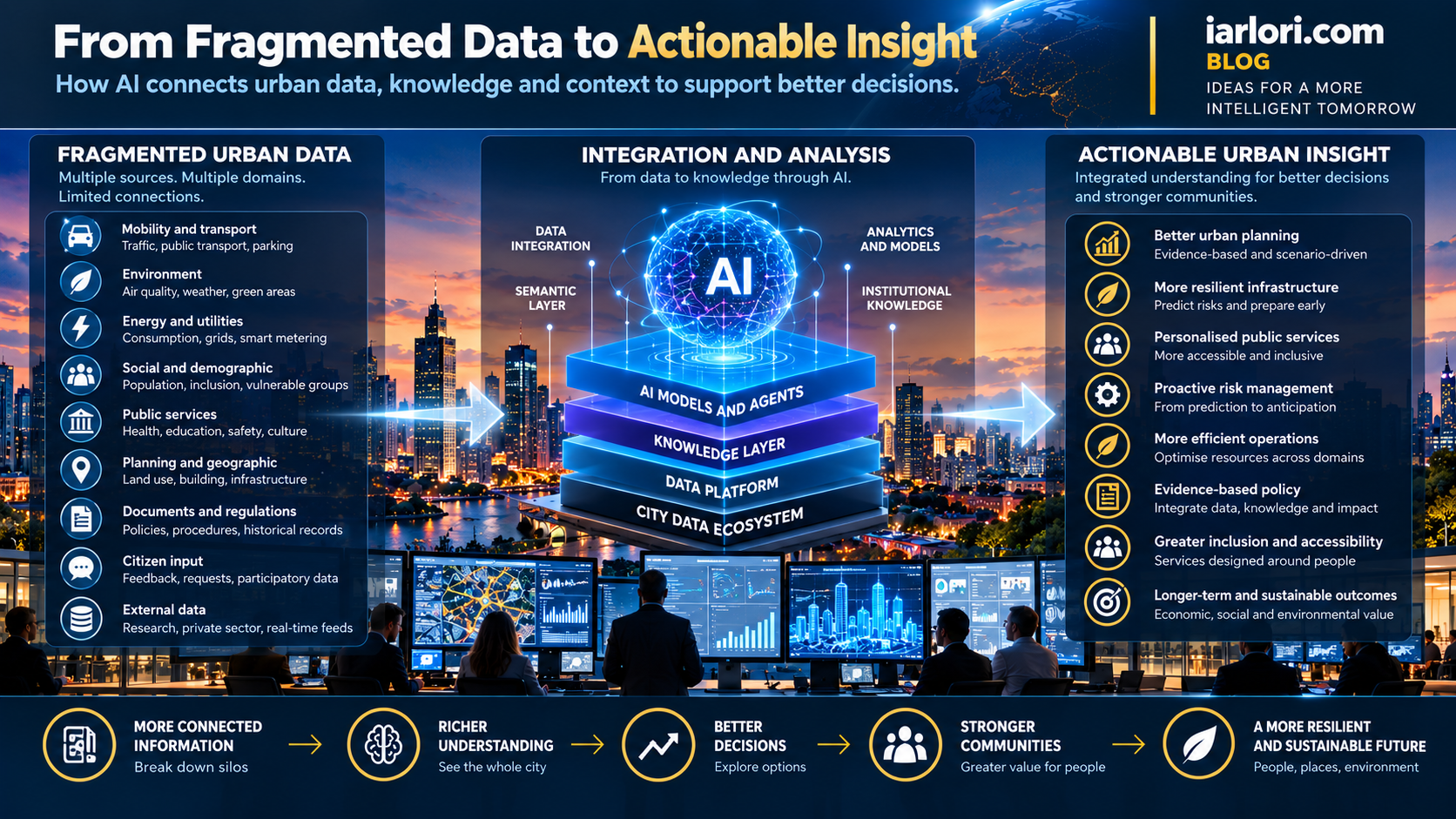
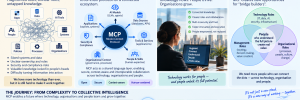
Figure 2 – From Fragmented Data to Actionable Insight. An Augmented City does not become intelligent simply by collecting more data. Intelligence emerges when fragmented urban information is connected with institutional knowledge, context, AI and human expertise, transforming isolated data into shared understanding and, ultimately, better decisions for people and communities. Conceptual framework: Francesco Iarlori, 2026.
This is why the Augmented City is not simply a city with AI. It is a city capable of connecting previously fragmented knowledge into a more coherent representation of reality.
From dashboards to questions
One of the great symbols of the Smart City era has been the dashboard. I have seen many of them over the years, and some are genuinely impressive. Maps move, indicators change colour, traffic flows across screens and control rooms acquire the visual language of mission control.
But dashboards have an intrinsic limitation: they depend heavily on someone having decided beforehand what should be displayed.
They answer predetermined questions.
AI changes this relationship because natural language increasingly allows us to interrogate complex information environments dynamically.
Instead of simply displaying traffic congestion, we can ask why congestion has changed.
Instead of showing air quality, we can ask which populations are most exposed and what other conditions correlate with that exposure.
Instead of showing public services on a map, we can ask how accessible those services actually are to someone with a particular mobility constraint.
The difference may sound subtle, but it represents a fundamental change in information architecture.
We move from presenting information to interrogating reality.
And that is one reason why I believe generative AI will have an important role in cities. Its most significant contribution may not be generating content. It may be providing a conversational interface between humans and enormously complex institutional knowledge systems.
Digital twins and the possibility of asking “what if?”
The development of Local Digital Twins takes this argument another step.
The European Commission describes Local Digital Twins as virtual representations of a city’s physical assets, processes and systems, combining data with analytics, machine learning and simulation to support better urban decisions. European initiatives are now moving beyond experimentation towards reusable and interoperable digital-twin capabilities for cities. The important idea here is not the visual sophistication of a three-dimensional city model. It is the ability to explore relationships and scenarios.
- A traditional information system tells us what happened.
- A real-time dashboard tells us what is happening.
- Analytics begins to explain why.
- Predictive models tell us what is likely to happen.
- A mature digital twin introduces another question:
What would happen if we did something different?
That question changes the role of digital technology in government.
Suppose a city changes the circulation of traffic in a neighbourhood. Instead of implementing the change and observing the consequences afterwards, it becomes possible to simulate at least some of the effects beforehand.
Suppose temperatures are predicted to exceed 38°C for several consecutive days. The interesting question is no longer merely whether the forecast is accurate. It is how that forecast interacts with demographics, vegetation, building characteristics, energy demand, healthcare capacity and public services.
This is the transition from prediction to anticipation.
And I consider that distinction essential.
Prediction tells us something about the future.
Anticipation changes what we do in the present because of what we understand about the future.
That second capability is organisational rather than purely computational.
Intelligence without judgement is not enough
Here, however, we encounter one of the most dangerous misunderstandings surrounding AI.
If an Augmented City can observe more, understand more and predict more, it may be tempting to conclude that it should also automate more decisions.
I do not believe that follows.
In fact, one of the recurring arguments in my writing about expertise is that the proliferation of AI makes human judgement more important, not less.
AI can produce an answer. Expertise gives the answer meaning.
An optimisation algorithm may discover the configuration that maximises traffic throughput. But traffic throughput is not necessarily the city’s highest value. Perhaps we want slower traffic because we value pedestrian safety. Perhaps we deliberately sacrifice efficiency to improve accessibility. Perhaps a public service continues operating in an area where it is economically inefficient because universal access is itself a public value.
These are not computational errors.
They are choices.
Cities are political, cultural and social institutions. They embody competing values that cannot always be collapsed into a single optimisation function.
This is where Organisational Intelligence must remain connected to institutional judgement.
The objective should therefore be augmentation, not autonomy.
AI should increase the space of what decision-makers can see, understand and consider. It should reveal patterns that would otherwise remain invisible. It should identify consequences and trade-offs. It should help institutions remember what they have previously learned.
But responsibility must remain visible.
The more powerful the intelligence infrastructure becomes, the more important accountability becomes.
From augmented infrastructure to augmented citizens
There is another reason why I prefer Augmented City to Smart City.
The real object of augmentation should ultimately be the person.
We often evaluate digital transformation through infrastructure metrics: connectivity, number of sensors, datasets published, digital services launched, API calls, cloud adoption or transactions completed.
Those are legitimate operational measures, but they are not the purpose.
Consider mobility.
A Smart City might tell me that the nearest metro station is 400 metres away.
An Augmented City should understand that I am using a wheelchair, that the closest station currently has a broken lift, that roadworks have temporarily made one pavement inaccessible and that an alternative combination of bus and metro would therefore be easier today.
The intelligence lies not in knowing where the station is.
It lies in understanding what the station means in my context.
The same principle applies to public administration. Putting a form online is digitalisation. Asking citizens to understand the administrative structure, discover which service they require, locate the correct procedure, provide information that government may already possess and then monitor the process themselves is still bureaucracy — only now it has a web interface.
An augmented public service should reduce that cognitive burden.
The citizen should increasingly be able to express an intention rather than identify an administrative procedure.
That may become one of the profound consequences of generative AI for government.
The value of time
This leads me to a metric that I think deserves much greater attention in discussions about digital cities: time returned to people.
How many hours does a person lose each year because systems do not communicate?
How much time is spent searching for information that already exists?
How much time is lost waiting unnecessarily?
How many journeys are made simply because information could not move instead?
How much professional time inside public institutions is consumed locating documents, reconciling incompatible information or repeating administrative tasks?
Technology has often been evaluated according to what it adds.
Perhaps intelligent public infrastructure should also be measured by what it removes.
- Friction.
- Waiting.
- Duplication.
- Uncertainty.
- Unnecessary movement.
- Administrative complexity.
An intelligent city is not necessarily one in which citizens constantly notice sophisticated technology.
Quite possibly the opposite.
The best urban intelligence may become almost invisible because the city simply works better.
London, Singapore, Barcelona, Helsinki – and why there is no universal model
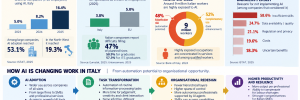
The four cities represented in the infographic accompanying this essay — London, Singapore, Barcelona and Helsinki — are deliberately different.
They have different administrative traditions, physical structures, political cultures, relationships with technology and approaches to urban innovation.
This diversity matters because there is a persistent temptation in technology to search for universal models.
We identify a successful city, label it smart and attempt to replicate its technology elsewhere.
Cities do not work like that.
Technology can travel relatively easily.
Institutions cannot.
A governance architecture developed in Singapore does not automatically belong in Barcelona. An approach that works in Helsinki cannot simply be reproduced in London. Administrative culture, legal frameworks, public trust, demographic structure, history and relationships between public and private actors all influence what technology can legitimately and effectively do.
This is another lesson I learned much earlier from international technology ecosystems. Standards can be global, but implementation is always embedded in institutions and cultures.
The same will be true of urban AI.
The objective should therefore not be to create a ranking of the world’s most augmented cities.
It should be to ask whether each city is becoming better at understanding and responding to its own people and its own circumstances.
The second infrastructure
Industrial cities were built around physical infrastructures: roads, railways, electricity, water, telecommunications and buildings.
Digital cities added networks, data centres, cloud platforms and digital services.
I believe the Augmented City requires what we might call a second infrastructure: an interconnected layer of data, knowledge, models, identities, semantics and institutional memory.
Some elements of this infrastructure will be technological: APIs, data spaces, knowledge graphs, semantic models, digital twins, AI models and increasingly AI agents.
But the important point is not the list of technologies.
It is the relationships between them.
If transport data cannot interact with accessibility information, that is not merely an interoperability problem. It constrains what the city can understand about accessibility.
If environmental data cannot interact with demographic information, it constrains what the city can understand about climate vulnerability.
If knowledge contained in planning documents cannot be connected with current decisions, institutional memory is lost.
Interoperability therefore becomes something much more consequential than an IT requirement.
It becomes part of the cognitive architecture of the institution.
This is one of the reasons I continue to return to Organisational Intelligence. The challenge of AI is increasingly not whether individual models are intelligent enough. It is whether we can build architectures in which data, artificial intelligence, human expertise, organisational memory and governance can work together.
And then comes governance
The more observable a city becomes, the more important it becomes to ask who is observing.
The more predictable human behaviour becomes, the more important it becomes to ask who is predicting and for what purpose.
The more personalised public services become, the more important it becomes to distinguish assistance from profiling.
These are not objections to the Augmented City. They are conditions for making it legitimate.
UN-Habitat’s work on People-Centred Smart Cities is important precisely because it moves the debate away from technology as an end in itself and towards inclusion, sustainability, human rights and institutional capability. The Cities Coalition for Digital Rights similarly places privacy, transparency, accountability, participation and universal digital access at the centre of digital urban development.
Europe’s approach to Local Digital Twins also increasingly recognises that the challenge is not simply technological. Data governance, interoperability, trust and public-sector capacity matter alongside IoT, cloud and AI.
This is exactly as it should be.
A public institution has a different responsibility from a commercial platform. People can often choose whether to use a commercial application. They cannot meaningfully choose not to live under the institutions governing the city in which they reside.
That asymmetry demands a higher standard.
Governance is therefore not a constraint imposed on urban intelligence after it has been developed.
Governance is part of the intelligence architecture itself.
Observe, understand, anticipate, act – and learn
The visual accompanying this article reduces the argument to four verbs:
OBSERVE → UNDERSTAND → ANTICIPATE → ACT.
I like the simplicity of that progression because it distinguishes different levels of capability.
A connected city can observe.
A knowledge-enabled city can understand.
A predictive city can anticipate.
An institutionally intelligent city can act.
But after thinking further about it, I would add a fifth verb:
LEARN.
Because action without learning merely creates a more technologically sophisticated bureaucracy.
An intelligent organisation needs feedback. It must compare predicted outcomes with actual outcomes. It must remember what worked and what did not. It must allow institutional knowledge to accumulate rather than disappear when projects end, suppliers change or experienced employees leave.
The complete cycle therefore becomes:
OBSERVE → UNDERSTAND → ANTICIPATE → ACT → LEARN → OBSERVE AGAIN.
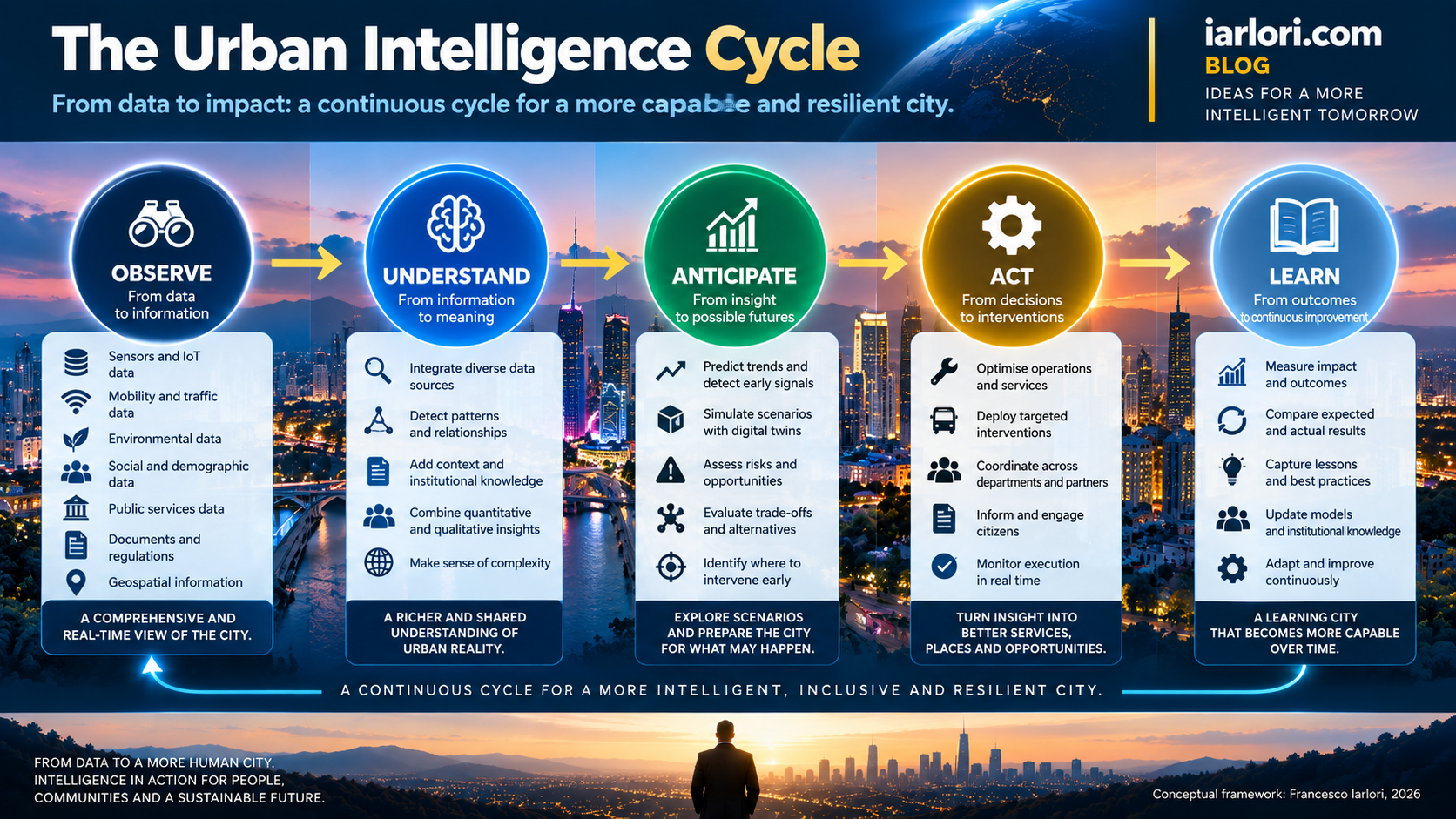
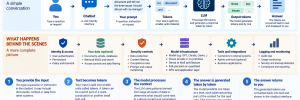
Figure 3 – The Urban Intelligence Cycle. Urban intelligence is not a linear technological process but a continuous institutional learning loop: observe reality, transform information into understanding, anticipate possible futures, act through informed decisions, and learn from outcomes. Conceptual framework: Francesco Iarlori, 2026.
That is not simply a Smart City architecture.
It is the architecture of a learning institution.
And perhaps that is ultimately what the Augmented City represents.
A more human city, not a more technological one
After more than three decades working around technology, from the early Internet and telecommunications through payments, mobility, digital transformation and now artificial intelligence, I have become progressively less interested in technology as spectacle.
The technologies change extraordinarily quickly.
The more persistent questions are organisational and human.
Who can act?
Who knows what?
Who is connected to whom?
Where does responsibility sit?
How does knowledge survive?
How does an institution learn?
And above all, what becomes possible for people that was not possible before?
These questions mattered when we were building mobile ecosystems. They mattered when digital payments changed the relationship between banks, merchants, networks and consumers. They mattered when transport became increasingly digital. They matter even more now that artificial intelligence is becoming part of institutional infrastructure.
The Augmented City should therefore not be a city covered in technology.
It should be a city in which technology has become sufficiently mature to disappear into better human outcomes.
The bus arrives when it is needed.
A person with reduced mobility can navigate the city with confidence.
A planner understands the consequences of an intervention before concrete is poured.
A public employee can retrieve the knowledge of the institution rather than rediscovering it.
A heatwave triggers preparation before emergency.
A citizen does not need to understand the organisation of government in order to obtain a service from government.
Different institutions can see different parts of the same problem and still act coherently.
And when the city makes a mistake, it remembers and learns.
That, to me, is a much more ambitious vision than the Smart City.
It is not a city in which artificial intelligence replaces human intelligence.
It is a city in which artificial intelligence, institutional knowledge and human judgement reinforce one another.
It is, in other words, the urban expression of the idea I have been exploring through Organisational Intelligence: intelligence does not reside only in people or machines. Increasingly, it resides between them — in the architecture of relationships that allows knowledge to become meaningful action.
The next generation of cities will certainly contain more sensors, more models, more digital twins and more AI.
But that is not how we should judge their progress.
The question should be much simpler, and much harder:
Has all this intelligence made the city more capable of understanding its people, anticipating their needs and improving their lives?
If the answer is yes, we may finally have moved beyond the Smart City.
We will have begun to build the Augmented City.
References and further reading
The conceptual argument above is mine, but it sits within a broader international movement towards people-centred, interoperable and knowledge-driven urban digitalisation. Useful reference points include UN-Habitat and its People-Centred Smart Cities programme; the European Commission’s work on Local Digital Twins and the European Local Digital Twin Toolbox; and the Cities Coalition for Digital Rights, which connects urban digitalisation with privacy, transparency, participation and digital rights.
For the connection between this argument and my broader thinking on AI, institutions and knowledge, see my Institutional Intelligence essays on LinkedIn and The Architecture of Thought: Artificial Intelligence, Organisation and Human Meaning. The recurring thesis is the same: the important question is no longer simply how intelligent AI can become, but how intelligent our organisations can become when artificial intelligence, human judgement and institutional knowledge are deliberately designed to work together.