My Years in Silicon Valley, Sun Microsystems, and the Birth of Toy Story – Now Echoing in the OpenAI–Disney Era
 My Years in Silicon Valley, Sun Microsystems, and the Birth of Toy Story – Now Echoing in the OpenAI–Disney Era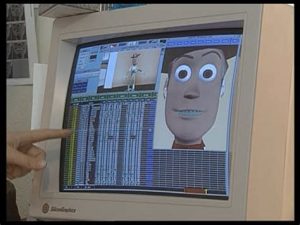
When news broke of the $1B OpenAI–Disney partnership, bringing Disney’s universe of characters into ChatGPT and Sora, it felt less like a breakthrough and more like a full-circle moment.
A circle that began for me almost 30 years ago, when I was working in Silicon Valley with Sun Microsystems, during the formative years of digital animation – right as Pixar was about to release Toy Story.
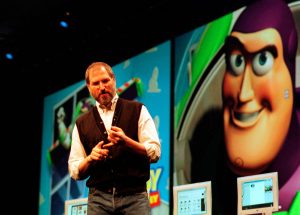
Back then, we were not talking about generative AI, semantic engines, or real-time adaptive storytelling. We were fighting with compute cycles, polygon counts, and tape backups. And yet, something fundamental was already happening: computers were becoming co-creators.
Sun Microsystems, SGI, and the Machines That Built a Revolution
In the early 1990s, Silicon Valley was a very different place. Oracle still had the atmosphere of a scrappy giant, Netscape was rewriting the rules of the web, and Sun Microsystems was the beating heart of the engineering world.
“The Network Is the Computer” was not a slogan – it was a cultural statement.
In that environment, I was involved in product placement, ecosystems, and collaborations that put me in direct contact with the technologies that powered the new era of digital storytelling. Pixar’s rendering farms were built on a mix of:
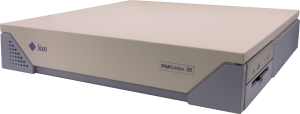
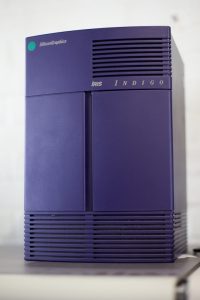
Those SGI and Sun systems, humming in cold server rooms, were the silent architects of the film that would change animation forever.
Toy Story: The First Fully Computer-Generated Feature Film
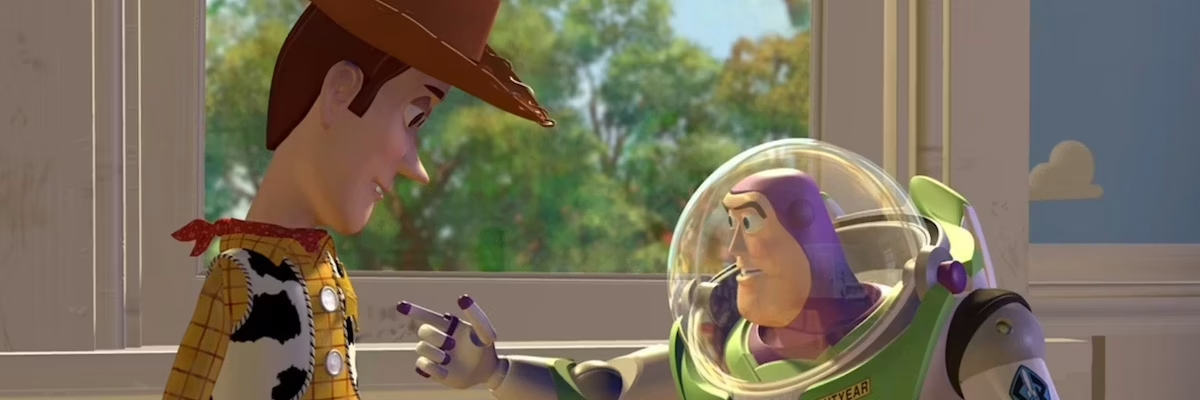
When Toy Story was released in 1995, it was a shockwave. Not only because it was technically dazzling, but because it introduced a new category of cinema—one where storytelling and computation became inseparable.
What many people forget is how computationally brutal that film was to produce:
• A single frame could take 4–12 hours to render.
• A second of footage meant days of compute time.
• Lighting models, shaders, and reflections were all handcrafted by engineers and artists working side by side.
Sun servers and SGI workstations made that possible. Pixar famously had entire rooms filled with SPARC systems crunching frames 24/7.
Looking back now, that world feels both primitive and heroic. We were stretching machines to their limits, trying to build on hardware that could barely hold the weight of our imagination.
And yet, the real revolution was philosophical:
For the first time, technology did not just support storytelling—it was storytelling.
OpenAI + Disney: Completing a 30-Year Arc
Fast forward to today. When OpenAI and Disney announce a $1B partnership, what they are really announcing is the next phase of the Pixar revolution:
not rendering, but reasoning.
Instead of machines calculating light paths, they now calculate meaning, context, intention.
Instead of rendering frames, they render possibilities.
Imagine:
- A child talking to Woody or Elsa inside ChatGPT, with the characters adapting to the conversation in real time.
- Teachers generating entire interactive lessons with Disney characters as guides.
- Story worlds expanding dynamically based on each user’s imagination.
- Sora turning a text prompt into a cinematic sequence with Disney-level quality.
This is not the Toy Story world we knew—this is a new medium where IP becomes generative and co-created.
From Compute Power to Cognitive Power
- In the 1990s, the frontier was compute.
- In the 2020s, the frontier is cognition.
The Pixar artists and engineers I met back then were obsessed with how to make plastic feel like skin, how to make reflections look real, how to simulate emotional authenticity in geometry and light.
Today, the question is different:
How do we make digital characters think, react, and evolve?
Steve Jobs always believed Pixar was not an animation company but a storytelling company enabled by technology.
In many ways, the OpenAI–Disney deal is the natural evolution of that philosophy.
Why This Moment Matters
Having lived through the Sun/SGI era and touched the origins of the digital storytelling revolution, I see three critical implications:
1. Intellectual Property Becomes a Living Asset
Disney IP will not just be licensed—it will be activated in generative form.
2. Storytelling Moves from Production to Interaction
We move from content consumption to content co-creation at scale.
3. Entertainment, Education, and Brand Worlds Converge
The same character can teach chemistry, answer mental health questions, or entertain.
This is not just a technical shift; it is a societal one.
Closing the Loop
When I think back to meeting Steve Jobs during Pixar’s early days, I remember the conviction in his voice when he said that computers were becoming an expressive medium, not just a tool.
He was right.
What began with Sun SPARC machines rendering frames has evolved into AI models rendering meaning.
And now, with the OpenAI–Disney partnership, a cycle that started in small offices in Richmond, Emeryville, and Mountain View finally closes—and opens again.
Not just better graphics.
Not just better compute.
But a new grammar for human imagination.