 There was a time when the future of artificial intelligence seemed to run exclusively through Silicon Valley, Shenzhen, Seoul, and a handful of European research hubs. Today, a new axis is forming – not based on software innovation alone, but on infrastructure, capital, and geopolitical strategy.
This axis runs through the Arabian Gulf.
Between 2020 and 2025, sovereign wealth funds and state-backed entities from Saudi Arabia, the United Arab Emirates, and Qatar have quietly – and now very visibly – positioned themselves at the center of the AI race. The shift is not incremental. It is systemic.
The message is clear:
The world’s next generation of intelligence will not only be trained – it will be financed.
A Turning Point: Qatar + Brookfield’s $20 Billion AI Infrastructure Bet
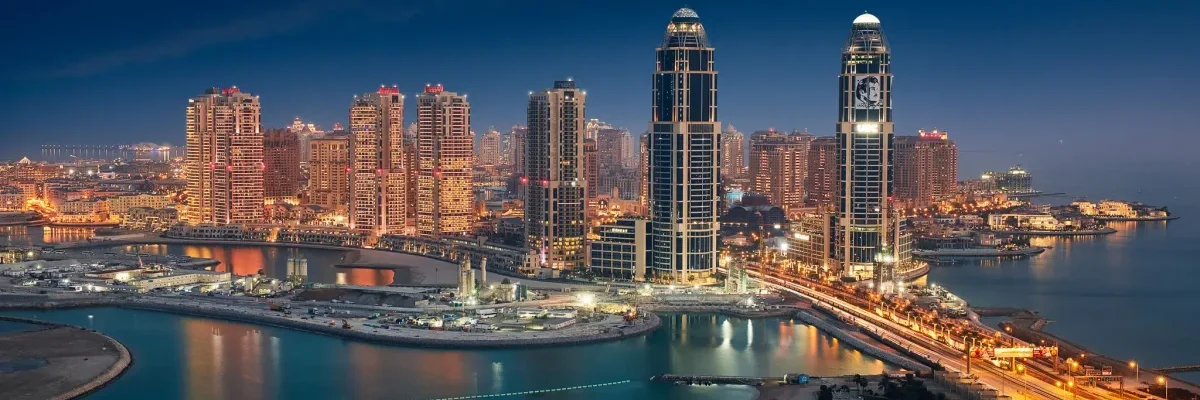
In December 2025, Qatar’s sovereign-backed AI company Qai announced a $20 billion joint venture with Brookfield to build a network of AI “Gigafactory”-scale compute centers across the Middle East and global markets.
This is not a cloud investment.
This is not a software play.
This is sovereign compute capacity – political, strategic, and infrastructural.
These centers are designed to host large-scale AI training and inference for enterprise, government, and global AI companies that increasingly rely on access to:
High-performance data-centers
Specialized chips
Ultra-low-latency network backbones
Energy-dense computing environments
The deal symbolizes a new phase: Gulf nations are no longer customers of global tech — they are now co-architects of the global compute layer.
A Surge of Gulf Investments in Global AI & Tech
The Qatari initiative is part of a broader regional wave:
Saudi Arabia’s Public Investment Fund (PIF) is launching a $40B AI fund and partnering with Google Cloud to build a $10B AI hub in Riyadh.
PIF and QIA are investing in next-generation chip companies like Cerebras and d-Matrix, key players in the post-GPU era.
UAE-backed G42 and Mubadala have expanded into the U.S. market, investing heavily in AI infrastructure and forming deep ties with Silicon Valley R&D.
And unlike traditional sovereign-wealth behavior, this is not passive equity allocation.
This is strategic alignment with the critical supply chains of AI:
Compute
Chips
Cloud infrastructure
Robotics
Foundation model development
National security applications
Why the Gulf Is Making These Moves
The motivations are aligned with a deeper historical narrative.
For decades, the region financed the global energy economy.
Now, it is positioning itself at the center of the global intelligence economy.
The strategy rests on four pillars:
1. Economic Diversification Beyond Oil
AI is the new growth engine – a replacement for hydrocarbons in national GDP portfolios.
2. Technological Sovereignty
Owning compute infrastructure means independence from U.S., European, and Chinese clouds.
3. Soft Power and Global Positioning
AI infrastructure creates new forms of influence – from digital trade to defense positioning.
4. Regional Leadership and Capability Building
Arabic-language models, sovereign LLMs, and regional research centers are emerging.
The Global Consequence: A New Map of AI Power
Until recently, the AI race was framed as U.S. vs. China.
Europe looked for regulation.
Japan and South Korea focused on robotics and chips.
Now a third center of gravity is emerging:
The Gulf is becoming a global AI capital hub – not just investing, but shaping the infrastructure where future AI will run.
This shift creates a new dynamic:
Where will the next foundation models be hosted?
Who controls compute access?
Who trains the next generation of AI talent?
Who controls energy — the most scarce resource required for AI scaling?
For the first time, the answer may be:
Riyadh, Abu Dhabi, or Doha.
A Historic Transition
We are witnessing one of the most important global repositionings since the emergence of the oil economy in the 20th century.
Just as hydrocarbons reshaped geopolitics, compute capacity is becoming the new currency of power.
And the Gulf — with capital, ambition, and strategic alignment — is stepping into that future not as a spectator, but as an architect.
Closing Thought
As I watch these shifts unfold, I’m reminded of the cycles I’ve lived through – from the labs, to the mobile revolution in Europe, to Silicon Valley’s first wave of cloud and software-defined everything. I’ve seen technologies rise, disrupt, fade, and transform entire industries and identities.
But this moment – the fusion of capital, compute, sovereign strategy, and intelligence – feels different.
It isn’t just about innovation.
It isn’t just about profit.
It isn’t just about technology.
It’s about who gets to shape the rules of the next era.
It’s about who owns infrastructure—not just ideas.
It’s about whether AI becomes a tool of progress, or a pipeline of dependency.
And what strikes me most is that history is repeating — but with new players.
Where once the world waited for Silicon Valley or Shenzhen to move first, now I see Riyadh, Abu Dhabi, Doha stepping forward with the confidence not just to participate, but to architect. They are not buying technology – they are building the foundations for it.
As someone who has walked through decades of digital transformation – from copper lines to fiber, from mainframes to distributed cloud, from static systems to self-learning intelligence – I feel a familiar tension:
the world is shifting, and not everyone has realized it yet.
We are entering a new phase of global technology – one defined not only by code, but by energy, infrastructure, alliances, and intent.
And perhaps the real question now is not:
Who will build the smartest models?
but:
Who will build the world where those models live, learn, and accelerate our future?
My journey has taught me one lesson over and over again:
Technology doesn’t shape societies alone – vision does.
Today, vision is coming from unexpected places — and that may be the greatest disruption of all.