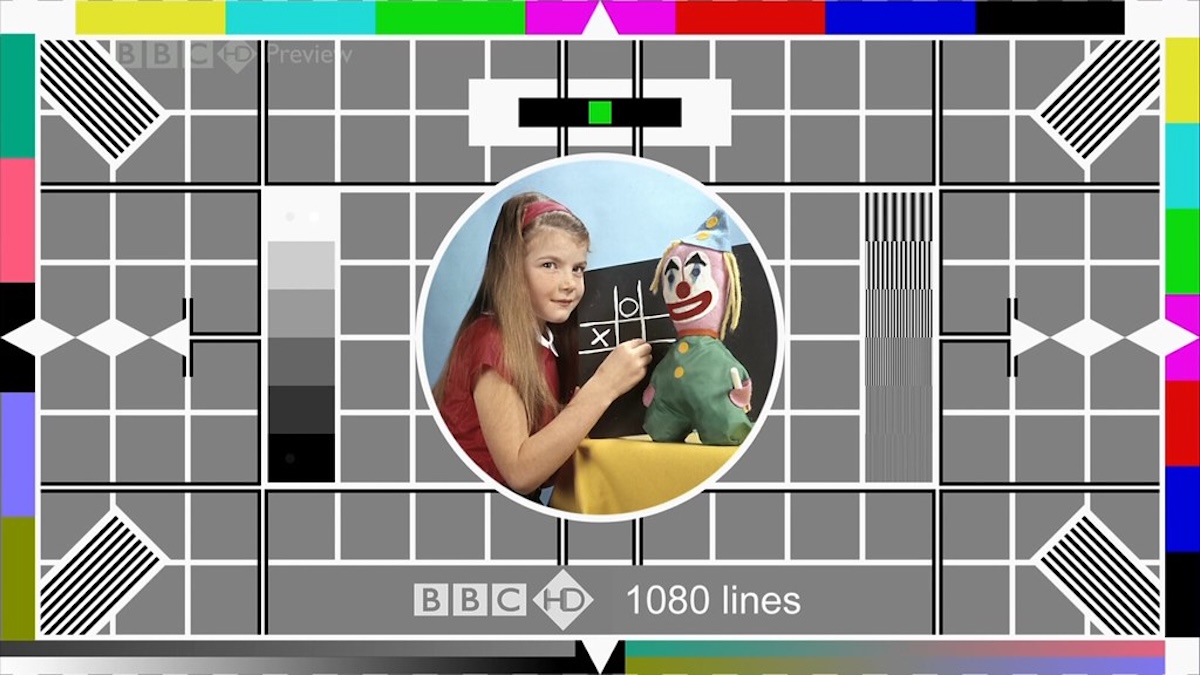
For decades, broadcasting wasn’t just an industry — it was a cultural rhythm. Programming schedules shaped evenings, advertising shaped business models, and national broadcasters shaped identity.
Television was linear, predictable, territorial.
Then everything changed.
The rise of broadband, on-demand content, and personalized streaming didn’t just challenge broadcasting — it rewrote its foundations.
I’ve had the privilege of experiencing this transformation from the inside: first with RAI, then Mediaset, and later with Sky. Each organization has carried a distinct legacy, strategy, and relationship with the streaming revolution — and each now finds itself navigating a radically reshaped landscape.
And with Netflix’s recent move to acquire the streaming and film divisions of Warner Bros Discovery — a $72B deal — the next chapter of global media consolidation has begun.
This is the moment to reflect on where European broadcasters stand, how we arrived here, and what comes next.
RAI: Public Service and Cultural Stewardship
RAI has always represented something unique: broadcasting as a public mandate.
It built identity, education, and shared national experience long before algorithms and segmentation.
But the shift to streaming wasn’t simply technological — it was cultural.
Platforms like RAI Play emerged, but the challenge remains: how do you preserve a public service mission in an environment where global platforms control attention, user habits, and storytelling scale?
RAI’s role is increasingly not to compete, but to remain culturally essential — local storytelling in a global content economy.
Mediaset: Commercial Broadcasting Meets Digital Competition
Mediaset entered the digital era with momentum, commercial strength, and a storytelling machine spanning fiction, entertainment, and news.
Yet streaming disrupted the model built on ad-based mass audiences.
Netflix, Amazon, and later Disney didn’t just offer content — they offered choice, personalization, and convenience.
Mediaset responded with experimentation — from digital platforms to Mediaset Infinity — and more recently with a broader focus on European collaboration and addressable advertising.
But the question remains:
Is the future of national broadcasting independent, or strategic alliances across Europe the only viable path?
Sky: The Hybrid Phase – Between Broadcast, Cinema, and Platform
Sky represents the bridge: a broadcaster that became a platform before it became a streamer.
Premium content, sports rights, exclusive film releases, and a strong subscriber model created resilience.
Sky saw the streaming storm early and responded with NowTV (NOW) — flexible, digital-first, and subscription-based.
Yet even Sky now competes not only with other broadcasters but with Amazon as a sports broadcaster, Apple as a movie studio, and Netflix as a global distributor and IP owner.
The boundaries are gone.
Everyone is everything.
The New Map of Power
Broadcasting used to be national.
Streaming made it borderless.
With the Netflix–Warner Bros deal now reshaping the industry, we see a shift from:
📺 Channels → 💻 Platforms → 🤖 Data-driven entertainment ecosystems
A company doesn’t win because it owns content — it wins because it owns:
- The audience relationship
- The data
- The distribution pipeline
- And the ability to iterate storytelling based on real-world signals
This is no longer broadcasting.
This is computational media.
What Comes Next?
For broadcasters in Italy and across Europe, the challenge is not simply technological transformation — it’s strategic repositioning:
- Local identity vs. global scalability
- Public mission vs. platform economics
- Linear programming vs. algorithmic personalization
The future belongs to those who understand that storytelling is becoming interactive, adaptive, and everywhere — and that value is no longer in owning time slots, but in owning attention, access, and experience.
A Personal Closing Reflection
I have seen this industry evolve from analog signals and satellite uplinks to AI-powered content production and personalized streaming ecosystems.
And yet, despite the disruption, one truth remains unchanged:
Technology evolves. Audiences evolve.
But great stories still win.
As we enter this new era — where platforms merge, boundaries collapse, and entertainment becomes data-driven — one thing is certain:
We are only at the beginning of the biggest reinvention broadcasting has ever seen.
📍 If you haven’t yet, read my LinkedIn post on the Netflix–Warner Bros deal – because this acquisition isn’t just a news headline.
It’s the first domino in a new wave of media transformation.